Context
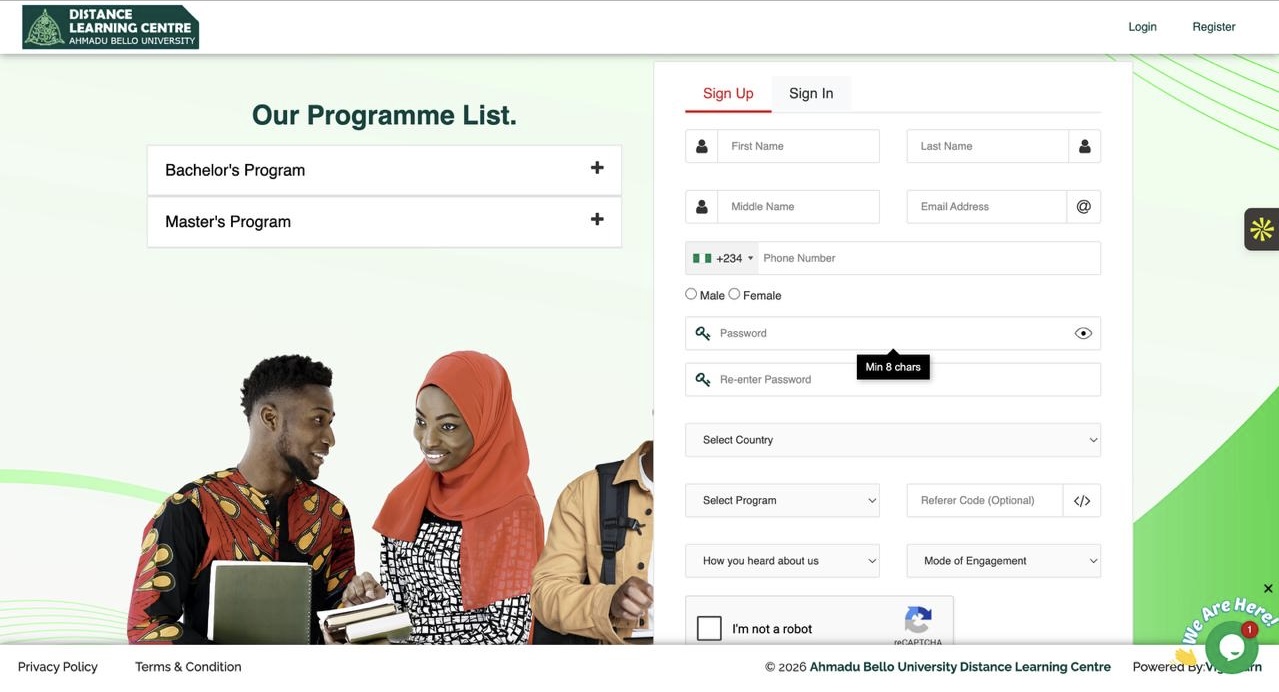
Apply is a digital admissions hosting portal used by institutions and corporates to run admission and selection processes. At Edutech Global (Vigilearn) I managed the enhancement of version 1 and led end-to-end development of version 2.0. It's live today, powering Ahmadu Bello University's Distance Learning Centre admissions portal.
Problem
Institutions running admissions manually, or on fragmented tooling, need a single portal that handles onboarding, program/role selection, and payment collection without a support team fielding manual reconciliation requests every admissions cycle.
Opportunity
Version 1 already existed but had real friction in the application flow and no clean way to handle multi-party payment splits. Closing both gaps in v2.0 was the difference between a portal institutions merely tolerate and one they'd actively recommend to other institutions.
Research
Scope definition and user-behavior mapping — not just a stakeholder wishlist — identified exactly where applicants were dropping off in the form flow, which directly shaped what v2.0 needed to fix first.
Decision-Making
The clearest decision was sequencing the payment-integration work against the form-completion work. Both mattered, but form completion directly affected whether an applicant reached the payment step at all, so it was treated as the higher-leverage fix.
Prioritization
Form-completion improvements were prioritized ahead of secondary admin-side features, on the reasoning that every unfixed drop-off point cost more applicants than any admin convenience feature would gain.
Execution
Implemented a multi-party Paystack payment-split integration, eliminating manual billing reconciliation, and coordinated UX, engineering, and QA through Figma-mapped user flows and structured test cases through the v2.0 rebuild.
Collaboration
This was a coordinated, cross-functional delivery — UX, engineering, and QA all worked from the same Figma-mapped user flows and structured test cases, rather than each function interpreting requirements independently.
Trade-offs
Investing structured QA effort — Figma-mapped flows, structured test cases — ahead of a faster, looser v2.0 launch meant a longer path to release, traded for a post-launch defect rate below 1%. A trade worth making again for a system institutions depend on for admissions cycles they can't repeat.
Outcome
Form completion increased 18% through the scope definition and user-behavior mapping work. The Paystack multi-party payment-split integration eliminated manual billing reconciliation entirely. The v2.0 rebuild shipped with a post-launch defect rate below 1%, and Apply is live today, verifiably, powering Ahmadu Bello University's Distance Learning Centre admissions portal.
Reflection
The sub-1% post-launch defect rate wasn't an accident of careful engineering alone — it came from UX, engineering, and QA working off the same mapped flows and test cases from the start, rather than QA discovering gaps after the fact.
Lessons Learned
A payment-integration feature and a form-completion feature can look like separate workstreams on a roadmap, but treating them as sequenced — fix the funnel before the payment step — rather than parallel independent efforts is what made both numbers move.
Future Improvements
Extending the same multi-party payment-split pattern to other institution types beyond the current deployment is the natural next step — the integration was built for this use case first, and generalizing it is unfinished.
My Contribution
Managed the v1 enhancement and led end-to-end development of v2.0 — scope definition, user-behavior mapping, the Paystack integration, and coordinating UX/engineering/QA through the rebuild were mine, working with Edutech Global's cross-functional team rather than solo.